Skip to content
Ottawa
Branding and logo design / Ottawa

Branding agency in Ottawa: brand names and logos in EN and FR

Marketing MIX builds brands for Ottawa businesses, from the positioning to the sign over the door. Every bilingual name and layout is checked in English and French before it goes to print.

Priced after a short brief, fixed in writing

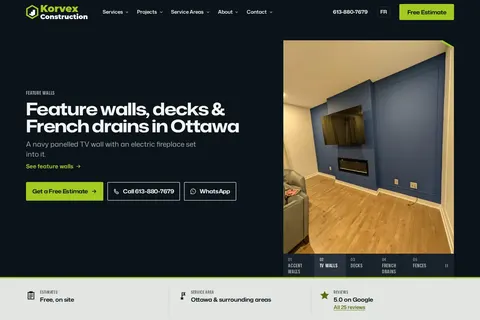
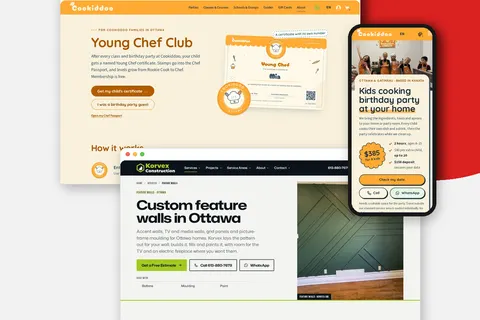
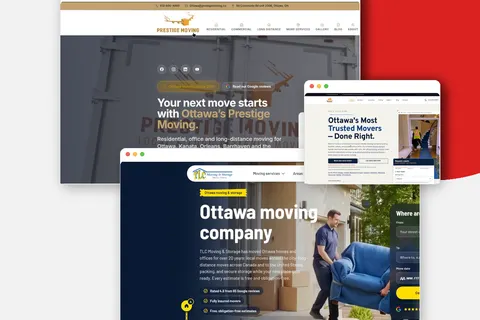
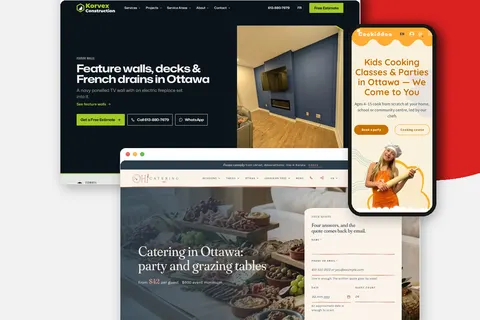
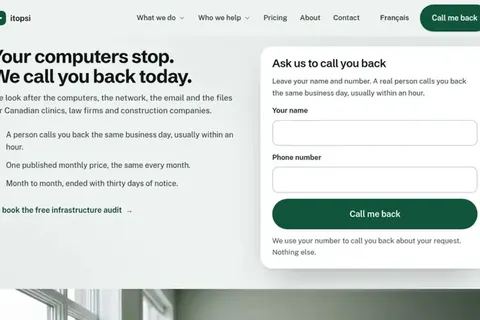
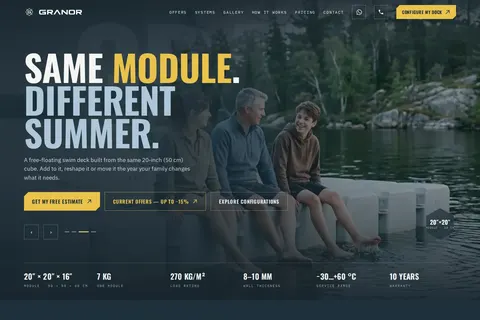
Screens of Ontario brand work by Marketing MIX: the itopsi IT support site, the GRANOR floating docks landing and the Korvex Construction print kit

itopsi after its rename, next to the GRANOR word mark on the dock landing.

What a branding project covers

Priced after a short brief, fixed in writing

Audit of the current brand

The current name and logo get a hard look first, together with the site and the signs, next to the competitors a customer compares them with. The result is a written map of where the brand holds up and where it slips.

Positioning

Positioning pins down the buyer and the one reason to choose this company over the shop down the street. It is written up as a positioning statement with values and a short company story, and every later text and design follows from it.

Name and trademark search

New names are drafted and checked against competitors and against domains that are still open. Then the Canadian Trademarks Database is searched across every status, and the application can be drafted with goods from CIPO's pre-approved list, as was done for GRANOR.

Logo and visual identity

Main and compact logos, a palette, the type pair, a set of graphic elements, and rules for photos. The logo is tested tiny, as a Google Maps pin or an app icon, and large, on a sign or the side of a van.

Brand book and templates

A brand book that a printer or a sign maker can follow without phoning anyone. With it come templates for weekly material such as social posts, slide decks, business cards and price lists.

Print and graphic design

After the identity comes the daily design work, from roll-ups and brochures to packaging and ad banners. Korvex's kit was sized to the printer's own templates; bilingual versions are made wherever the customer base needs them.

Brands read in two languages here

On the Quebec side, the OQLF says that since 1 June 2025 a trademark may appear only in another language on signs if no French version of it is registered with CIPO. On a sign visible from outside the premises, French has to be markedly predominant, which the OQLF puts at text taking at least twice the space of the other language. A business name in another language also has to carry a French generic term, and the logo lockup is drawn with room for it.

Ontario customers tend to meet the brand on a phone first. A Google Business Profile, an Instagram grid, a storefront in Westboro, a truck parked in Barrhaven and the website all carry the same name and logo, so the identity is planned for every one of them at once. Slogans are written in both languages at once, with extra width kept for the French line.

  • Centretown
  • ByWard Market
  • The Glebe
  • Westboro
  • Kanata
  • Orléans
  • Barrhaven
  • Nepean
  • Stittsville
  • Gatineau

How a brand gets built

1

The brief and an audit of what exists

The client fills in a brief on customers and competitors and sends what exists already, such as an old logo or photos. The current brand is audited and the findings go back in writing.
2

Positioning, approved before any design

Competitor analysis comes first, then the positioning itself: values, mission, the main message and what sets the company apart. The client approves it before any design file is opened.
3

The name first, then the logo

Words come first. Where a name or slogan is needed, it is settled before any drawing. Then logo concepts with colours and fonts, each mocked up on a sign and on a phone screen.
4

Brand book and a plan for the years ahead

One concept wins and gets built out into the full kit and the book, with the edit rounds agreed up front. Then comes a plan for one year, three or five, listing where the new identity goes first; details are fixed once it is on real signs.

Brand work on Ontario projects

Inside the studio's own business group, the Ottawa IT support brand IT-TEAM was renamed itopsi to match its domain, since a generic name and a domain with a different name read as two separate companies to search engines and AI assistants. Its August 2026 redesign, NORTH LIGHT, uses Schibsted Grotesk for headings and Public Sans for text, with one boreal green kept for promises. GRANOR's dock name went through a clearance search, then into application 2496521, filed 24 August 2026. In October 2026 Korvex Construction received a print kit with two 33 by 81 inch roll-up banners, two tri-fold brochures, business cards and a T-shirt print.
Questions Ottawa clients ask

How much does branding cost in Ottawa?

Each project is quoted after a short brief, with the price fixed in writing. A logo for a new company costs less than a full identity with a brand book; naming with a trademark search is priced on its own. The site for the new brand is a separate line, from C$500 + HST for a landing page and C$1,000 + HST for a multi-page site.

How long does a logo and brand identity take?

It hinges on the number of concepts and edit rounds, and on how fast decisions come back from the client's side. Positioning always comes first, since the logo grows out of it. A schedule with a date for each stage is sent before work starts and updated in writing if the scope changes.

What is needed to start a branding project?

A filled-in brief on what the company does, who it serves, who it competes with and where it is headed. Any existing material helps: an old logo, colours, fonts, photos, texts. Examples of brands the owner likes, and ones the owner cannot stand, help a lot, and short written answers are fine for the first round.

Can a brand work in English and French in Quebec?

Yes. Names and slogans are checked in both languages, and logos and layouts leave room for the longer French line. For signs in Quebec the OQLF rules on trademarks and on markedly predominant French apply, so bilingual versions are drawn from the start.

Who owns the logo and the brand files?

The client does. The logo arrives in vector and raster formats, with colour codes, the font list and the brand book, and the hand-over terms are written into the agreement. A trademark filed through the studio goes in the client company's name, with goods and classes agreed before filing.

How do you know whether a rebrand worked?

Before design starts, the client and the studio agree what the brand should change, for example recognition in the area or trust on a first visit to the site. After launch the countable parts are tracked, such as searches for the brand name in Search Console and enquiries from the site. Then the details are adjusted.

What's the difference between branding and personal branding?

Branding builds the identity of a company or a product. Personal branding makes one person, such as an expert or an executive, known for one clear thing through positioning and LinkedIn, and through what comes up when someone searches the name. The stages are similar, and personal branding has its own page on the site.

Send the brief for your brand

Write about the business and the customers it wants more of, and list what exists now: logo, site, signs, photos. The reply comes in writing, with a review of the current brand and site and a plan of stages.

Request a proposal